Wednesday, 29 March 2017

Inside Outside Circles Discussion Activity

Do you sometimes set up discussion activities, only to watch as students either gawk at each other uncomfortably, allow 1 or 2 individuals to dominate or end up talking about something completely off-topic? This activity is a great way to generate lots of focused talk. Because the discussions are short and have a specific prompt to guide them, there is no option to not speak, and not enough time to exhaust the points that could be made. Here's how it goes:

  • Divide the class into 2 equal groups.
  • One group forms an outer circle, and the other an inner circle.
  • Students are given a question to discuss a timer is set (the number of minutes depends on the focus of the discussion but usually around 1-3 minutes is enough).
  • When the time has expired, one of the circles moves clockwise or anticlockwise while the other remains stationary. (This alternates between the circles each time.)
  • The activity continues until a preset time has been reached, or all people in inner and outer circles have spoken to each other.

Watch more on this, and see it in action below.


This activity is so adaptable, it can be used in any subject where a discussion is beneficial to the learning. When I'm not using stations, this is my second go-to with task cards, but it can be done even simpler than this by writing or displaying a question on the board at each rotation. 
Give it a go, and see how it enlivens your students. 

Sunday, 19 February 2017

Cooperative Play - Race the Game!

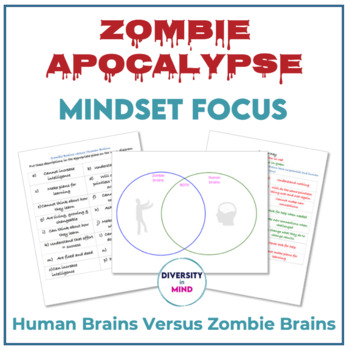
My teen students had such fun playing my Zombie Apocalypse game; I have mostly used it for review - with the students producing question banks - but sometimes they just play it for the sake of seeing if they can overcome the game. Seeing them work together so enthusiastically convinced me I just had to expand the cooperative model to another game. One aspect I wanted to work on was the fact that Zombie Apocalypse takes at least 30 minutes to play, and sometimes longer depending on the many variables at play in the game (and so is best suited to one sitting). This time I wanted a game that could fill any time from 5-10 minutes upwards.

I'm happy to say I achieved my aim with Race the Game. In fact, I went one step further and created 4 different versions of the title so we can mix it up a bit as the semester continues.

Overview
The game is simplicity itself, but with that essential element of tension to keep players engaged. It is essentially another review game where - in 3 of the 4 versions - teams get to move forward one space on their track for every correct answer. For every incorrect response, the game gets to proceed along its much shorter track. The goal is to reach the finish line before the game does.
All that's needed are 2 counters (which could be coins, erasers or even bits of paper) and a set of review questions. I prefer to have students produce these as part of their revision, but sometimes I use it to review our word wall terms. If you are looking for stems or examples for your own game, here are some resources to get you started:


Wednesday, 4 January 2017

Cooperative Gaming - Playing Together v Playing Against

A while back, I came across the concept of cooperative gaming through the popular boardgame Pandemic. I thought the idea of having players cooperative rather than compete was brilliant, and getting students to work together toward a common goal much more conducive to positive relationships than traditional boardgames where players are pitched against each other.

Playing is how we learn to behave in life. Practising skills like listening, suggesting, discussing and so on allow us to develop positive relationship skills that have a direct connection to collaboration and teamwork.

Furthermore, when we play cooperatively, we don't just reach a goal but we do so together and this brings its own joy.

So much in school seems to be about competition as students compare scores and grades, go up against each other in sports and strive to be the 'most' in whatever arena they find themselves in. There is an over-preoccupation with 'getting ahead' of others in today's world (IMHO), and cooperative games are a great antidote to this.

A wider aspect of cooperative gaming is the link to sustainability. We have seriously worrying problems to solve at the local, national and global levels and is likely that cooperation - if anything - is the solution: we can achieve much more together than alone.

An interesting fact is that Elinor Ostrom - 2009 Nobel Prize winner - showed through her work that in many cultures across the globe, people work together to preserve the resources necessary for living. This happens without any policies, laws or authorities - it's just makes sense to protect the ecosystem of which you are a part.

While we may be lead to believe that competition is natural, many biologists disagree.  For example, Peter Kropotkin says: “competition . . . is limited in animals to exceptional periods . . . Better conditions are created by the elimination of competition by means of mutual aid and mutual support.” You may also be surprised to learn that the phrase “survival of the fittest” was not coined by Charles Darwin but by Industrialist Herbert Spencer!

All in all, the benefits of cooperative gaming are so numerous that I was sold on promoting them with my students. To this end, I created a game to go with our 'brain' (metacognitive study) unit and used the theme of zombies to
stoke their interest. The first encounter with the concept of the game confused many of my students, but after working out the gameplay, they were off! They now ask regularly if they can play it and we've worked it in as a way to review content toward the end of our units.

UPDATE: Another game I created with my mythology-mad teen son is based on Greek Mythology. I've had my secondary students play it, and they love it. One of them commented that they wished they could buy it and play at home, so I decided to list it for sale. Here's a preview. You can also click on the image below for a bigger image.

If you think you might like to try out cooperative gaming, I really encourage you to do so. While creating your own game definitely takes time and effort, you will undoubtedly find it a most rewarding process enhanced by the delight of your students as they play and realise that truly, 'Together everyone achieves more!'

Friday, 18 November 2016

More Ideas for Task Cards

For related posts, click on the 'Task Cards' label in the right-hand column.

I've been using task cards for a long time now, and I've come to love them. For some reason, students never tire of them and the fact I can get students physically moving as they learn is an additional bonus to the differentiation, student choice and variety they allow for.


In a previous post I outlined some ways I've used them but I realised an update was well overdue. So, in no particular order, here are some other ways you can use task cards in your classroom.

Try this!
Give one card to each student to face down on the table. The first student turns over the card, reads it aloud, and each team member takes a turn to respond. When the card has been thoroughly discussed, the next student turns another card over.

Or this!
Give the cards to students who are early-finishers.

Or this!

Give each student one card. If your class has more than 20 students, divide the class into 2 groups so each student within a group has a unique card. Students individually complete their card producing a written response. When done, they partner with another student and swap cards. Repeat the activity. When both students have completed their responses, they then compare and discuss. Repeat the activity until all cards have been explored, or the time limit has been reached.

Or this!
Print off the cards 2 or 4 sets to a page (i.e. 8 or 16 cards to 1 sheet of paper). Give the miniature cards to students to stick into their notebooks and respond beside / under.

Or this!
Use one of the cards as a whole-class starter activity at the beginning of a lesson.

Or this!

Create stations around the room with the different task cards. In partners, students spend a specific time (e.g. 3 minutes) discussing the prompt on the card. When the time has elapsed, they move on to the next station and repeat.

Or this!
Leave a set of cards printed and ready-to-go in case of sickness or absence.

I hope this has given you some ideas, and if you come up with more, do share.
Happy teaching!

Saturday, 11 June 2016

No More Grammar Worksheets! Part 1

Every English teacher soon realises that at least a basic understanding of how grammar works is essential for efficient student-teacher communications. I have no interest in producing near-graduate linguists, but just try asking for an apple, without using the word 'apple'.  It's a lot more time (and energy) consuming than just using the specific word.
The same applies when trying to explain to a student why they can't use a comma to separate 2 complete ideas, and then getting into a further discussion about what an 'idea' consists of in this context. It just isn't as precise or clear as saying, "You can't join 2 independent clauses with a comma." Of course it takes some effort upfront for a student to get to the point where they understand what a clause, never mind an independent clause is, but over 15 years in teaching have lead me to the firm belief that it's time well spent.

So, how to develop these grammar skills without dragging your students (and let's face it - yourself) through another dull-at-the-desk worksheet exercise? Can any teacher hand-on-heart say that grammar worksheets honestly improved their students' writing?) While there are thousands of books, articles and blog posts on the subject, teachers don't have time to read them all, so in this series of posts tagged #nomoreworksheets, I'll explore alternative ways  to help build a more effective toolset of tried-and-tested activities.

One important note - the only way to truly improve student writing is through writing. Neither reading about writing, nor discussing writing will be as effective as actually putting pen to paper to practice any grammatical concept learned. With precise feedback, and regular in-class writing sessions (that can be as short as 10 minutes if you're feeling time-pressured), you will see improvement.

Approach 1: Make Language Board Games 
Objective: Reviewing & building students' grammatical vocabulary
While we may think students will scoff at the idea of such a project, board games are something of a novelty to most, given most of their entertainment is from a screen these days.
Some time near the beginning of the year, I get my students to take on one area of grammar to teach their peers. In any given class, there'll be teams researching and creating materials on whichever aspects of grammar I've seen their age-group struggle with. At this point, I am trying to build a common language around terminology, so they can use various question formats including:

  • multiple choice
  • true or false
  • complete the sentence
  • fill in the missing word
  • what is this an example of
  • give me an example of ...

Asking a local pizza shop for some unused boxes will save a lot of time. Students can use the base as their game board, paste the instructions inside the lid and keep any counters or other items in the box.

Click here for a FREE instruction sheet for your students.

Thursday, 9 June 2016

Zombies Everywhere!

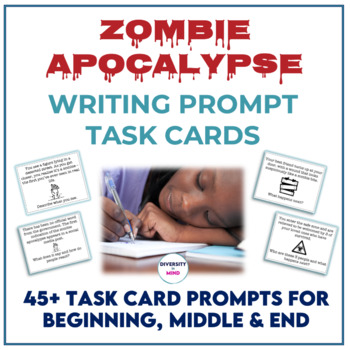
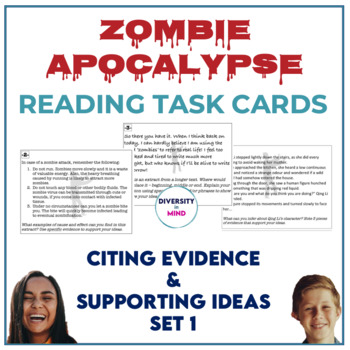
In my previous post, I set out my intention to create some 'zombie-themed' resources for my upcoming Learning to Learn unit. While I might not have been posting about it, I've been really busy and now I've made a start on a resource each for reading, writing and speaking and listening. While they are not entirely new, being based on activities I've used before, I'm excited that they are now in a ready-to-go format that I can simply print and provide.
My students gave me some super-helpful reviews and suggestions for improvement, so here are the results of my labours, including a freebie.


And the freebie...


What now? I recently heard about the concept of co-operative board games which has me intrigued. What a great idea for building community and collaboration! Time for some further explorations...

Tuesday, 17 May 2016

Learning to Learn with Zombies

In a previous post, I raved about the Coursera 'Learning to Learn' MOOC I took,  and also set out my intention to create a start-of-year unit for my students that would address their readiness to learn, while helping them understand how to work with their brains to maximise learning success.
I'm not sure why it took me so long to settle on a way in, but I finally decided to engage the students with zombies. After all, my son regularly wanders around monotonously repeating the word 'brains' with one trouser-leg rolled up, and the students often talk of their zombie fascination, so why not?

To that end, I am still determined to maintain the integrity of my subject - English - so I've decided to make it a unit on reading, and the final assessment will be a research task.

I got so excited about the idea that I pulled together my tried-and-tested 'learner training' materials to start transforming them for the unit, and I'm pleased to say I'm well on my way. Already, I've created materials for reading, writing, and speaking, and I have been digging up articles on mindset, organisation, memory and inspirational learners so I am sure I will have plenty to draw upon.

Watch this space for updates, or check out my shop for previews and promotions.

Saturday, 14 May 2016

What to do with task cards?

One of the main reasons I have so many sets of task cards is that it allows me to differentiate and give students choice. No longer do I have to stand at the front and teach a concept that some already know, or drag students through the one task on offer. With task cards, I can introduce variety and engagement. My students regularly ask if we can use them more frequently than we do, so that's proof enough for me that they're worthwhile.

As for longevity, I am not a fan of laminating, but I do print them on thick card so I can re-use them year on year and with various classes. I keep the sets in marked shoeboxes so they are easy to identify when I need them in a hurry.

The most common ways I use task cards are below.

Set up stations in the classroom. For example, in a class of 32 students, I might have 16-20 different stations, depending on the number of individual tables available. I always like to have more rather than less so that students can move on without having to wait for everyone to finish. The best method I've found is to assign no more than 2 students at each station to begin. If possible, they sit opposite each other rather than together to minimise distractions, unless the task is actually a collaborative task.

Task cards are also great for students who finish an activity before others. They can simply be assigned one or more cards and can work quietly and individually, hopefully on something they have chosen.

For starters and plenaries, task cards can be used for the whole class or again individually. I like to use my writing prompt cards for students to demonstrate a particular skill we may have explored, such as subordinate clauses or semi-colons. By providing a choice of 3-5 prompts, students can do a 'quick write' in about 10 minutes to demonstrate mastery of the chosen technique: great for formative assessment.

So, that's just a few of the ways I use task cards, but there are many more I'll talk about in future posts. 

Friday, 6 May 2016

Memory and Learning

I recently completed Coursera's offering Learning To Learn. Apparently, it's the most popular MOOC ever and, although I've taken many a course in metacognition and learning, I can totally agree that it was the most useful PD and personal learning experience I've had in a long time.
Barbra Oakley, the main lecturer, fills the course with anecdotes and interesting neuro-research, while offering practical insights to how you really can learn better.
In watching one of the videos which introduced the Pomodoro technique, I sat down at my laptop and finished a book I'd been procrastinating on for over 2 years - it took me all of an hour-and-a-half!
Some of the best take-aways I've had are:

Now, I'm in the process of distilling the most practical and digestible nuggets of wisdom for my future Grade 6 classes, and I have recommended the course to anyone I can contact. A few have taken up the challenge and written to tell me how much they are getting from it - I urge you to take a look too.

(I followed up this course with another MOOC - Memory and Movies - which has complemented this learning. More on that soon.)

Saturday, 10 October 2015

Who'd Have Thought? 6th Grade Rocks!

Teaching and Learning Co-ordinator for the International Baccalaureate Diploma program was my last full-time role, and I saw my future as developing within the IB program. I enjoyed the Language and Literature course immensely and was (and still am) in whole-hearted agreement with the IB's holistic approach.

So how did I end up teaching 6th Grade in a non-IB school? I suppose my current school had originally caught my eye as a non-profit, particularly because it did run the IBDP program in high school. By the time I decided it was a good idea to put in an application, however, middle school teacher was the only position open at the school I truly wanted to work in. When I was asked which middle school grade I'd like to teach in my new school, I went for the one that involved a Digital Literacy class - Grade 6.  I wanted to keep my hand in with technology and felt teaching a class meant it would be part of my P&P rather than working above and beyond my job spec. 

It wasn't really until I had arrived in Vietnam that I really stopped to question that decision. Me. Teaching young students. Full-time. Probably not a great idea. Actually, possibly a terrible idea. Working in a 3-18 school meant regularly I witnessed the empathetic, patient superstar educators dealing with the young ones. Much as I wished I could be like them, I knew I simply wasn't.

Well, perhaps half the battle is realising you're in one. For sure, I wasn't going to let my deficiencies affect my students' learning, so I started the year with a strong focus on the socio-emotional domain in my classroom. I strived extra-hard to be empathetic, to give my students a voice where they were naturally inclined toward compliance and silence, and focused every lesson on communication and building a sense of a team, me included. We still have much work to do but already I'm seeing some great gains. By no means can I prove every student is comfortable approaching me or loves every lesson, but I do feel we've established a general classroom culture of sharing, expecting to be held to high standards but supported at the same time, and feedback indicates they know I care for them as individuals (even when I'm badgering them for their missing assignments).

And the big surprise for me is I am enjoying it immensely. I love being able to see actual growth, even over the few weeks since the start of the year. In teaching older students, you see progress when marking assignments, but with 6th Grade there seems to be a discernible change every week. This might be in their organisation, interaction or academic skills but their learning just seems so more visible. Not to mention they have a great sense of fun, and are willing to take risks when encouraged. I'm finding I have more patience than I ever knew, and they are teaching me to be a much more methodological and routine-based instructor; they need the structure to navigate through the transition from one teacher and one classroom to many.

So there you have it. After 15 years of teaching and seeing young learners as the classes to avoid, I find I've been staying away from some of the most rewarding teaching of my career. Let's see where this leads!

Sunday, 4 October 2015

Writer Workshop & Block Schedule (The Answer)

Since writing this post expressing my frustration with our block schedule when trying to fit in reading and writing, I've found a solution that works for us. Unsurprisingly, it comes courtesy of Kasey Kiehl so rather than trying to summarise what she says so well, here's the link.
I downloaded her free advice pack from TeachersPayTeachers and realised I was not using my time efficiently. Now we've got transitions down to seconds, and we are reading and writing, to some extent, every lesson. An added bonus is that the extra 2 or 3 students I conference with in the reading sessions adds up to a better rotation time between all the students.
If you're struggling with the same issue, I highly recommend exploring the above links.

Note-taking with Google Slides

Although I'm not a fan of teaching at the front, there are times when we just have to stand up and guide students through a concept or information. If you'd like students to be active listeners and take notes as you present, here's an idea I thought may be worth sharing.

Make a copy of your Google Slides presentation, delete your presentation notes and then distribute a copy to each individual (perhaps using Doctopus, or by asking them to make a copy themselves). In that way, they can use the editor view to look at the slides you are talking about while putting notes in the presenter part.


Then, to review, they can view in 'with speaker notes' to see their notes alongside each slide.


A couple of ideas for formative / summative assessment:
  • focus on note-taking competence: assess the notes they take by asking them to share the presentation with you (focus on note-taking skills)
  • focus on comprehension: ask the students to record themselves presenting it back, perhaps adding in their own responses to prompts embedded - an alternative would be to present live in small groups & get peer, rather than teacher, feedback
  • focus on quality of discussion: pair or group students to see what they can add in discussing the presentation later - I would ask them to use a different font colour to show what was added from their discussion, allowing me to see what was they managed on their own and what they gained from their peers' ideas.

Monday, 21 September 2015

Good at learning or good at school?

A former student responding to a prompt asking the difference between learning and studying:

"It’s one thing to read Romeo and Juliet, and I can tell you, you know, which ones were the Capulets and, you know, I can name and tell you Juliet, who she is. I can pick out the symbolism and I can say, this is a reference to this, that was happening in Elizabethan England. It’s another thing to read Romeo and Juliet and to talk about some of those higher level themes and then to make connections between Romeo and Juliet and something I saw on television or something that’s going on in my own life. Now, I own that information, because I can manipulate it and use it to meet my own needs versus I've memorized that information, it’s stored in my head, but I can only access it when we’re talking about Romeo and Juliet." 

And that's what rigorous learning material helps kids learn how to do. If I can get my 6th graders anywhere near this understanding, I'll have achieved something worthwhile this year.

Writer Workshop & Block Schedule (The Question)

The school I've recently joined has been using the Lucy Calkins Units of Study. The wordiness and overly-scripted plans feel prescriptive rather than guiding, although I acknowledge they are not meant to be so. This has encouraged me to look at how others (such as Kasey Kiehl) are doing it, and dip in and out of Calkins as needed for my 6th Grade students. Furthermore, my positive experiences with PBL have encouraged me to have a 'real world' goal at the end, rather than their writing ending up in a rarely-shared portfolio.
So far, the setting up of the workshop has been OK. I talked to them about publishing a book at the end of the year containing the best of their writing, but they have to go through a panel to be accepted; only their best work will do! They were pretty excited at the prospect and turned to their notebooks with great enthusiasm. Problem was, there was a weekend plus another 3 days until they got to tackle their challenge again. We alternate between writing workshop and literature circles, so seeing them every other day means ELA twice or thrice a week maximum.
At the moment, that is my challenge - trying to maintain the pace and interest in writing with such long gaps between. Add to that the reduced contact time with the students because of other (useful) interruptions to the curriculum, and it feels like it's taking a long time to really get into that all-important flow.
I could - as my predecessors did - do writing every time we meet, but the admitted result was a marginalisation of reading. And let's face it - whatever curriculum you follow, ELA is not just about reading and writing, especially these days with ever-expanding definitions of reading, writing, media and communication in general.
Anyway, it'll be time to re-assess at the end of the quarter which is far closer than I'd like to think given how little I feel we've done, but I guess I need to remember it's quality not quantity, and for sure we've established some important norms. These norms are centered around building an environment of trust among peers, so we can support each other on our writerly journey.
I'm optimistic the pace will pick up as the year continues, and I am very much looking forward to seeing how my Grade 6 students grow in their writing. I guess patience has never been a strong suit of mine, and never moreso than when I'm excited to see the fruits of our labour!

Update October 2015: A follow-up to this post can be read here.

Thursday, 10 September 2015

What I've Learned So Far about Writers' Workshop

Writer Workshop
As keen as I was to give Writer Workshop a go, it doesn't fit a timetable where you see the kids every other day. It's designed to have kids write every day. While I saw some great things about it - not least the learners considering themselves as 'writers' and writing much more than before - the pace is too slow to maintain in my current context. I have reached out to all the literacy experts I could find online and offline, and nobody was able to offer a solution.
However, the conferencing idea within WW is one I will continue alongside other (most likely GDocs) feedback.

Grading
It's confirmed - I detest grading. Coming from a school that was comments only for the most-part, and reported on levels, the constant grade-chasing mentality of my learners is a definite issue for me. Rather than focusing on the learning for the learning's sake, they are motivated primarily by grades. Grades are recorded in PowerSchool and both parents and learners check them regularly - apparently up to several times a day (according to those who can view such statistics). Grades are required for every subject every quarter, and the indications are they will not be dropped because of parent demand.
It is such an issue that learners will not complete independent (homework) tasks unless there is a grade and a deadline. If anyone is in the same situation and has found a way to mitigate this, I'd love to hear from you.
Thankfully, our school is focusing on assessment this year, and admin has already been to a Dylan Williams workshop, so I'm hoping to see the positive impact of this. I remain hopeful but in the meantime feel like my soul is dirty.


Wednesday, 5 August 2015

Assessment - Positive & Negative Experiences

This year, my school is focusing on assessment as part of the strategic plan. Along with reading Classroom Assessment for Student Learning by Chappuis, Chappuis, Stiggins and Arter, we will have regular training sessions as a faculty.

Our first activity is to reflect on one negative and one positive assessment experience and why made them so.

Negative Experience
A negative assessment experience would be when I was given feedback from an assignment, without having known the criteria in advance. The feedback points came as a surprise and I hadn't been clear about the requirements. It felt unfair and illogical as my other experiences had been so transparent. I was not able to self-assess before the final outcome was judged and therefore there was an essential learning step that was missed. This was pretty typical of all my secondary school experiences. At the time I didn't question it as I usually did OK, but I was never sure of the specific rationale (even more confusing when it was a percentage rather than a grade, as we took As as great, Bs as good, Cs as a basic pass etc - all worked out by our teenage brains of course). As a side note, this also greatly contributed to a culture whereby students were considered - and considered themselves - 'good' or 'not so good' at school.

Positive Experience
In all honesty, the most positive experience came from receiving the highest grade when I wasn't expecting it. I had been aware of the criteria, bur was so caught up in the task itself that I hadn't particularly fretted over hitting every key point. It was part of the process that we had constant formative feedback at every step of the process so the high chances of success were as facilitated as they could be. By getting us to focus on the component parts of the assessment throughout, we automatically had the clearest understanding of what we were trying to achieve. Had the criteria been given to us as one multi-page document, I'm not sure our focus each time would have been so tight so I felt I learned a lot from this experience about the content and how to 'chunk' parts of the task for success.

Colleagues' Reflections
  • Trying to 'win' the game of guessing the exam questions - great when you managed it, but what was the point?
  • Poor environments for testing including distractions and some not taking it seriously.
  • Walking into exams blind with no idea of what's coming.
  • Having a time crunch e.g. writing an essay in 40 minutes when 10 minutes more would have been great. My note: What's that about? I'm sure we all recognise it but it just seems like training for tests with no relation to anything that happens outside of school walls?!
From http://intervention.pearsoned.com/balanced-assessment-ebook
[Accessed August 2015]
Considering our positive and negative experience in light of the '5 keys' above, I can relate almost all of them to each of the examples given. 

  • Key 1 - We either did or did not know what the point of the assessment was, whether to give us directions for future study or be summative. 
  • Key 2 - We either had clear or no ideas about why we were doing the assessment.
  • Key 3 - This one was less relevant because in the negative experiences, we knew nothing about the assessment purposes anyway, so being able to evaluate the design didn't even enter our heads. In the positive experiences, practical skills were assessed practically and content knowledge assessed appropriately.
  • Key 4 - In positive experiences we were clear about where our results came from and 'next steps'. In negative experiences, we simply received a grade or percentage with no further comment.
  • Key 5 - In positive experiences, we were engaged as students in the whole process and appreciated the assessment opportunity as a time to get useful feedback. In negative experiences, we were either completely stressed out or didn't care about the assessment.

Sunday, 3 May 2015

A Martian Sends a Postcard Home

With the long weekend, I finally got around to giving my much-neglected store some attention. Below is my latest offering on Teachers Pay Teachers.

Are you tired of reading dull prose that fails to capture the imagination? Have you had enough of the same worn-out similes and metaphors that do nothing to enliven the mind? This lesson focuses on encouraging students to write fresh and original descriptions that will stoke readers’ curiosity and capture their imagination. Make sure you share this goal with your learners!

From a reading of this popular poem by Craig Raine, students use his striking and unusual descriptions to create their own well-crafted paragraphs.

This lesson was originally created to prepare students for the imaginative / creative writing section of the IGCSE exam, but it can be used to inspire writing that jumps off the page at any level.

I have personally used this from Grade 6 to 12 with great results every time. As students submit their writing after this lesson, I actually look forward to seeing how shifting their perspective allows them to create truly different, engaging writing.

The resource includes:
-full teaching notes
-a copy of the poem (for classroom use only)
-an accompanying set of slides (in PDF form)
-game instructions and materials to get students thinking out of the box (a mental 'warm up' for writing)
-5 examples of original, imaginative writing inspired by this lesson (from my students)
-my ongoing support!


Click here to purchase this teaching pack or click here to visit my store.

Keywords: poetry, poem, martian, postcard, lesson, printable, ppt, presentation, teaching notes, instructions, guidelines, creative, imaginative, writing, igcse, gcse, ks3, ks4, ks5, raine, mixed ability, SEN, ESL, EAL, photocopiable, printable 

Wednesday, 1 April 2015

Persuasive Writing: Student-Made Videos

I've recently been teaching Grade 9 English Language Acquisition - or ESOL if you prefer - in the IB MYP program. The four students have been with us between 2 and 6 months, so the are very much developing all their skills. 
Outcomes for our current unit include being able to plan and write a persuasive essay, so in a bid to make the elements as clear as possible, the four students each produced a video on one of the following topics: thesis statements, topic sentences, supporting details and elaboration
Before commencing on the project, they negotiated this rubric
See the results below and feel free leave comments on their blog; they'd love to hear your thoughts.

Thesis statements by Sumire
Topic sentences by Steve
Supporting details by Ju Yeon
Elaboration by Ishak

Tuesday, 24 March 2015

Accountability & Student Surveys

'The Flawed Culture of Education Today'
https://artofeducation.wordpress.com/2012/05/23/the-flawed-culture-of-education-today/
It may seem self-evident, but I'll say it anyway: accountability in teaching is one of those things schools always struggle to balance. On the one hand, teachers are human so there will always be a certain number of people trying to 'get away with it'. However, on the other (much fuller?) hand, it's doubtful graduates follow the latest teaching news and come away with the impression that it's a job for those who are looking to coast toward the holidays, leading them to then enrol in teacher training college. This leads me to believe we teachers do the best we can most of the time, and that it may be more constructive to trust in this and work from that point forward rather than spending endless resources trying to force us to prove we care.
(This post from David Didau delves into the issue, pointing out the 'versus' mentality that seems to have arisen: if it's not teachers against the government, it's teachers against parents or teachers against students or...) 
I am about to start working in a school where students will be asked to fill out a survey to assess their teachers. Not knowing what this survey will entail, I'm curious (and possibly a bit apprehensive) about how the resulting data will be used.
I've experienced student surveys in the past where the instructions clearly asked respondents to avoid naming particular teachers (and when they did, names were removed) They were used as a general gauge as to how positive students felt toward their learning experiences in general, including - of course - time with teachers in lessons. However, the data was shared with everyone involved as it came in, rather than held by SLT and shared in a 'tidied up' version. This meant we were free to interrogate the results ourselves and where things weren't great, we individually reflected on why this might be with colleague discussion on how to address it. When all the responses were in, then there was a whole school meeting with SLT's interpretation but the tone indicated this was a set of results 'we' (SLT and all staff) were responsible for rather than just 'you' (the teachers). There was the acknowledgement that we are not lone islands with complete control over everything experienced in our lessons and a student's response might have been different on a different day, but where we saw strengths we could ask how that might be, and the same for where we saw targets. Out of this came approaches we could likely say were working, alongside things that definitely weren't. For example, in their comments, students made it clear they appreciated one-on-one time as teachers circulated the class during quiet working periods as - even in the most collegial of classes - they didn't always want to put up their hand and ask for assistance. It also became clear they didn't appreciate hours of homework and felt it had minimum impact on their learning, although they did feel that homework menus or customised homework helped them greatly. They also mentioned they didn't enjoy weekly reflections but admitted they did help them identify their achievements and targets, and so asked for them to be continued but perhaps done at key points, such as the end of a unit or topic, rather than at the end of every week. All these findings were directly applicable to each and every teacher whether they were practising the mentioned approaches or not - there was something we could all learn and consider.
On the other hand, I've also heard of student surveys where the results are used to berate and personally criticise rather than support and grow. I've even heard of them being used as a way of ranking teachers, a disgusting practice: we are not on Teacher Idol!
As everything points to the fact I am moving into a professional and collegial working environment, I fully expect that however these upcoming surveys are introduced and used, it will be without threat to individual teachers' confidence and self-esteem, so I hope to learn more about how this kind of feedback can be a positive aspect of self-monitoring. 
I already carry out more and less informal surveys about my own teaching among my classes and use this to continually adapt to their needs, so this added layer might just add some extra insights.

Thursday, 27 November 2014

Global Education Conference: Online and On Target


Last week, I finally had the opportunity to take part in the online Global Education Conference, organised by Steve Hargadon @stevehargadon and Lucy Gray @elemenous after managing no more than a 'dip' into it in previous years. It only made me realise what I'd be missing! The presentations I was able to participate in and moderate were of great benefit for people like me looking to develop their online connectivity, be it related to professional development or collaborating across classrooms.

I also took this opportunity to present my own experiences and ideas on running successful online collaborative projects and was most-grateful for the support of (what has turned out to be) my long-term mentor, Julie Lindsay of Flat Connections.

There were many sessions of note, but the first I will highlight was from Education Beyond Borders by Noble Kelly (recording here) in which he described the inspirational work they are doing with teachers on the African continent. What they have achieved so far is nothing

short of remarkable in terms of bringing 21st Century methodologies to the forefront of teacher training, and I highly recommend checking out their site and possibly getting involved.

Another session which was expectedly brilliant was from Julie Linsday and teacher partners who described and discussed projects they had taken part in. Some great ideas to be found for both beginners and veterans so check out their presentation recording here.

Although I could continue listing indefinitely, the final session I want to share was by the 'unschoolers' Lainie Liberti and her son Miro Siegel. They talked about their own immersive learning experiences alongside their initiative - Project World School - which brings "groups

of Western teens to South America to form a month-long intentional learning community." Watch the recording here but be warned - it may make you want to don your backpack and get going yourself!

I have downloaded several other sessions to watch, including one of personal interest on using Adinkra symbols to explore values and identity, so you can see just how wide-ranging the topics were. 

[Edit: Have just watched the session and it was really interesting to learn about Sue's experiences in Ghana connecting her students with classrooms in that country. Since visiting Ghana, Sue has set up the 'African Friendship Society' at her school and the engagement and excitement generated around writing is quite something to hear about. If you have 40 minutes, definitely check this out!]

For me, the conference underlined how powerful connecting educators across the globe can be, both in terms of inspiration and support. As the conference is also the launchpad for international projects, I have no doubt that thousands of students will have their learning experiences enriched by the connections made possible through GEC. Head over to Global Classroom Project to see how you can become a part of this global movement.

And no need to despair with the closing of GEC 2014 as you can check out all the recordings from this page. Happy learning!